5G Knowledge Center

What is 5G?

5G is the fifth generation wireless technology for digital cellular networks that began wide deployment in 2019. As with previous standards, the covered areas are divided into regions called “cells”, serviced by individual antennas. Virtually every major telecommunication service provider in the developed world is deploying antennas or intends to deploy them soon. The frequency spectrum of 5G is divided into millimeter waves, mid-band and low-band. Low-band uses a similar frequency range as the predecessor, 4G. – Wikipedia

What Makes 5G Different

True High Speed 5G works with what are known as millimeter waves. The millimeter waves work on much higher frequencies than 4G and as such have a shorter range. Therefore, for 5G to work properly, there will need to be transmitters EVERYWHERE. In concrete jungles like NYC, there will need to be a transmitter every hundred meters or so.
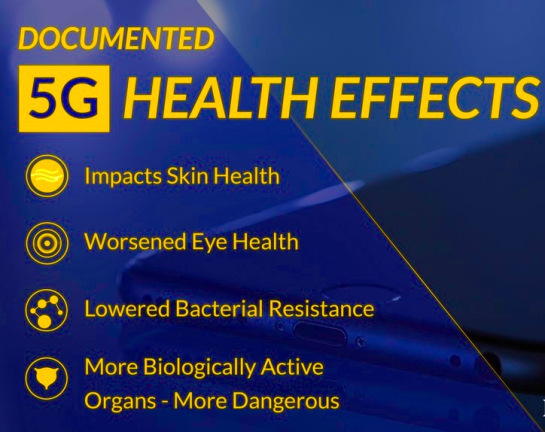
Stronger, Faster...Less Safe?

True High Speed 5G works with what are known as millimeter waves. The millimeter waves work on much higher frequencies than 4G and as such have a shorter range. Therefore, for 5G to work properly, there will need to be transmitters EVERYWHERE. In concrete jungles like NYC, there will need to be a transmitter every hundred meters or so.

Evolution of Wireless Technology

The 1980s brought the first analog cell phone to the United States. It worked like AM/FM radio and could only sustain a very limited number of users on the network at any given time. Like radio, it picked up interference from other callers and was very staticky when used far away from the transmission towers.

The 1990s brought the first generation of fully digital cellular calls with much better quality voice transmission and reception. This was also the first time data could be transmitted and saw the introduction of SMS (text) and picture messaging.

The turn of the century also saw the launch of 3G technology. Consumers not only had the standard phone features of voice calls and messaging, but could now also access the internet at a decent speed. 3G was mostly about speed, almost 250 times faster than 2G.

Launched in the United States in 2010, this was closely followed by apps like WhatsApp and many others that we now use daily. 4G brought internet connection at a super-fast rate of up to 100 megabytes per second on 4G enabled devices when moving and up to 1 gigabyte per second on stationary and in range mobile devices.